Featured post
20 Jul 2026 • 07 Mins read
The Model Is the Brain. The Harness Is the Body.
What I learned teaching vibe coding through context limits, phase prompts, validation loops, and the strange vector geometry inside language models.
Notes and interactive explanations about AI, science, software, and the systems underneath them.
20 Jul 2026 • 07 Mins read
What I learned teaching vibe coding through context limits, phase prompts, validation loops, and the strange vector geometry inside language models.
I reverse-engineered CBSE's entire evaluation system from one archived JavaScript file. Client-side OTP validation, password reset without verification, IDOR everywhere. Here's everything they didn't want you to see.

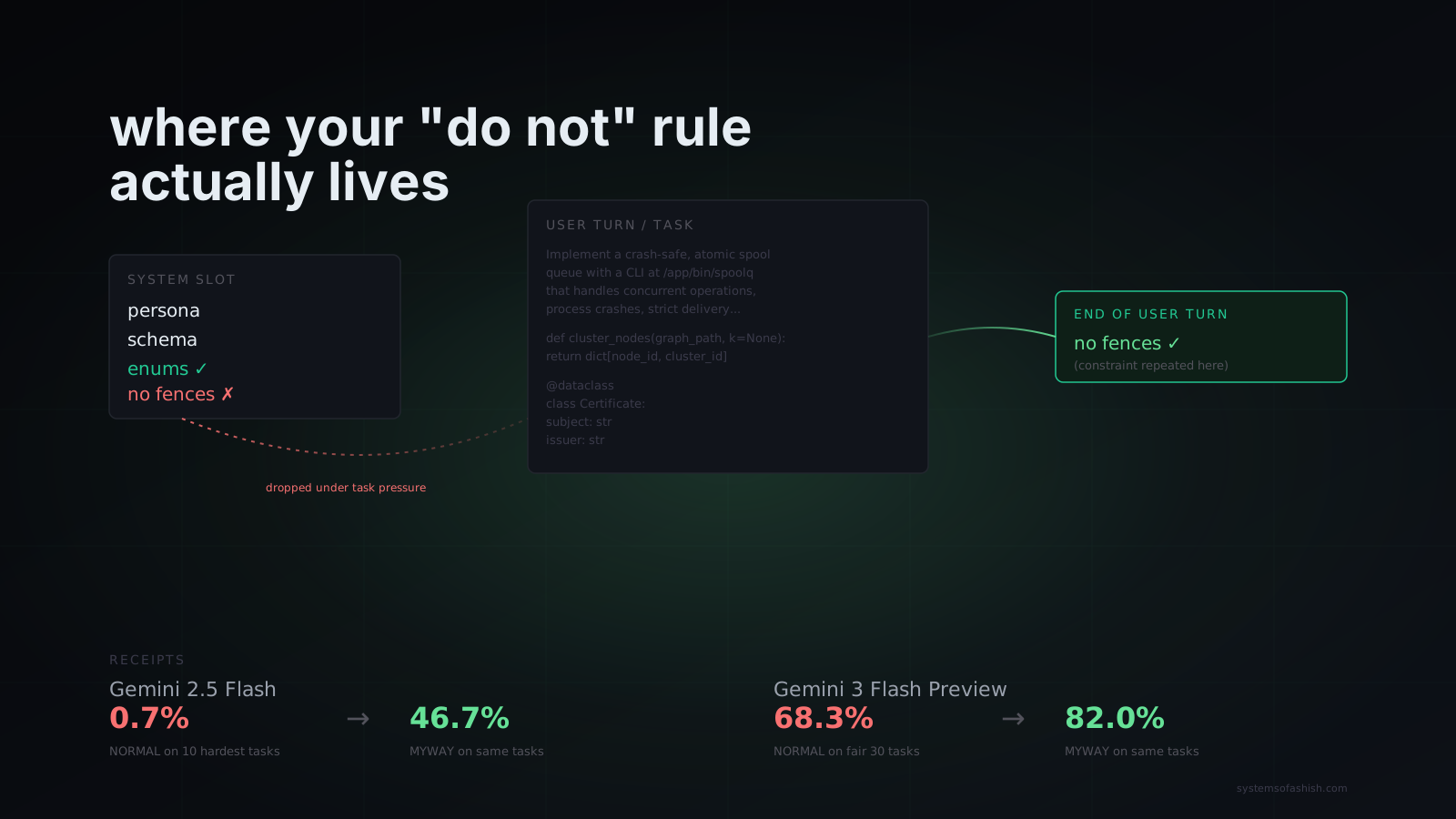
I had a hunch the standard system → user prompt order was wrong for negative constraints. Every standard answer told me to drop it. I ran 1500 calls on 30 hard tasks and the flipped version beat the standard one by 14 to 46 points. The system slot is the worst place for your 'do not' rules and the docs back it.
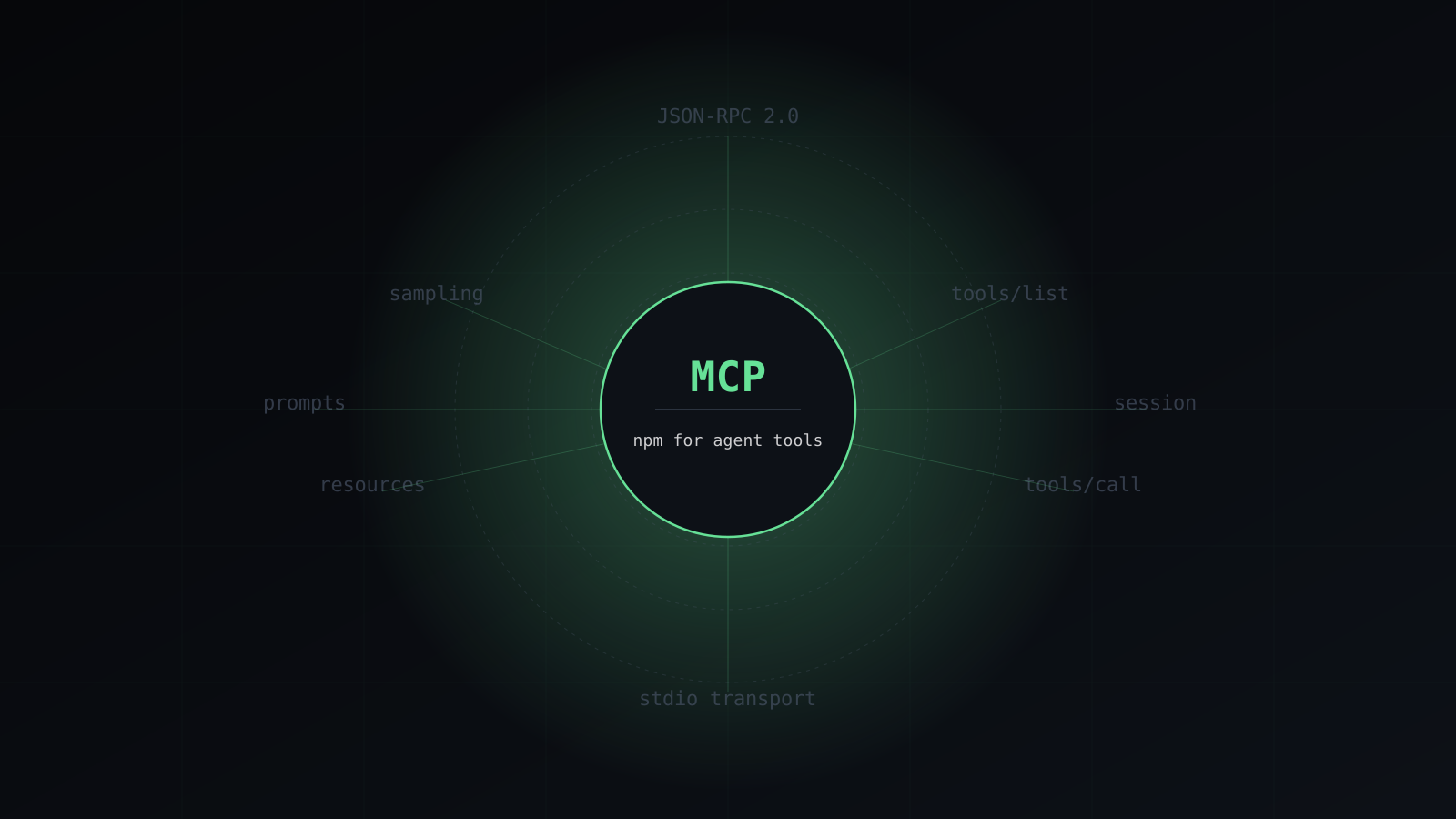
A friend asked what MCP actually gives you over plain APIs. I tried to defend it. Every defense line collapsed under one simple question. Here's the honest walk through why MCP is a packaging standard, not a technical innovation, and why that's still valuable.
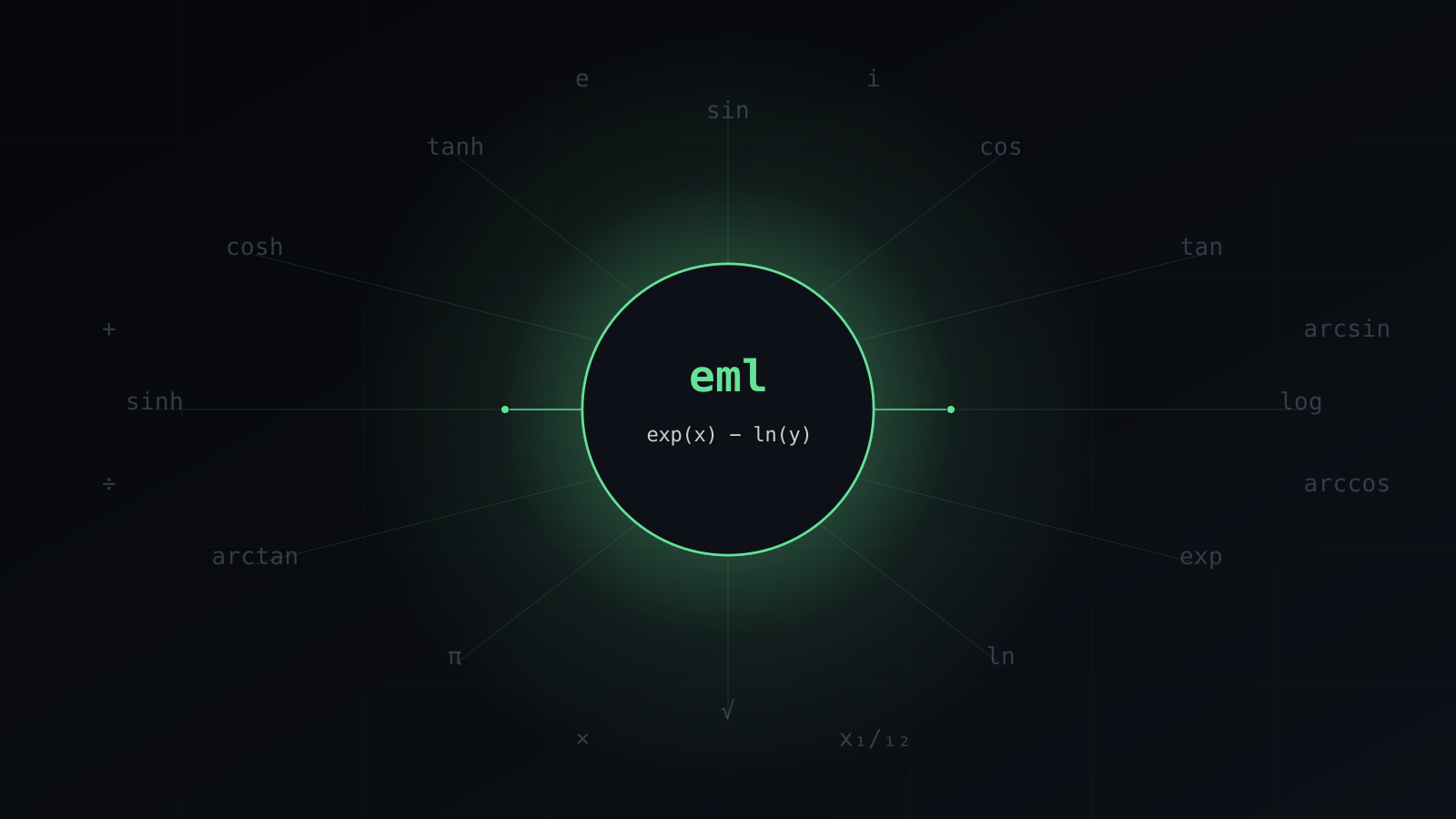
A new arXiv paper shows that a single binary operator, eml(x, y) = exp(x) - ln(y), plus the constant 1, can generate every elementary function. It's the continuous-math analogue of NAND, and it took 112 years to find.
Two researchers proved mathematically that rational firms will over-automate with AI even when they know it destroys the demand they depend on. Only one policy instrument out of six actually fixes it.

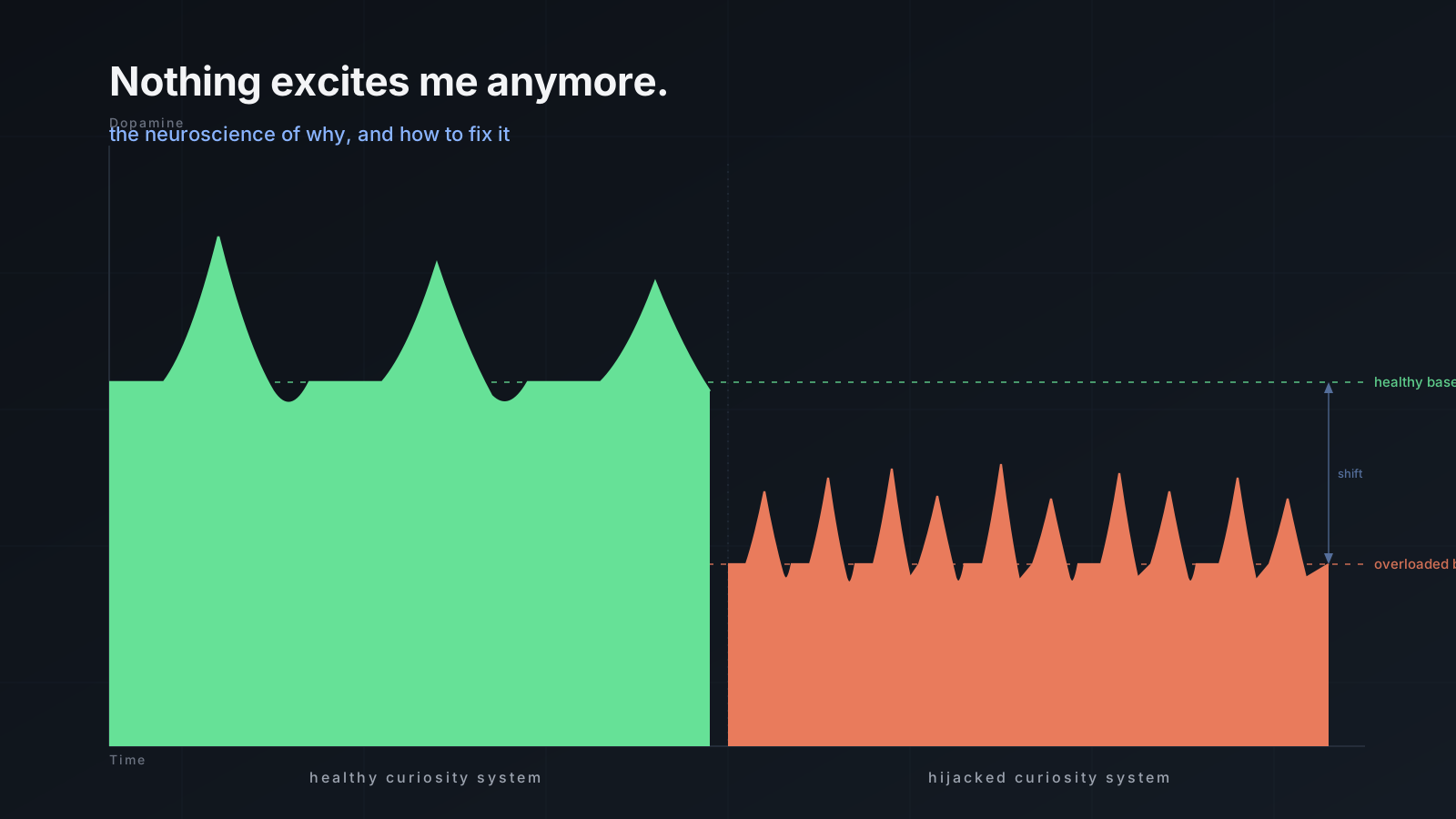
If nothing feels exciting the way it used to, it isn't your personality. Your dopamine baseline collapsed. Here's the neuroscience and the fix.
I read Anthropic's 243-page Claude Mythos system card. It starts as safety science and ends as 20 pages of employees marveling at their model's creative writing. The real story is buried in section 5.8.1, where they admit the circularity.

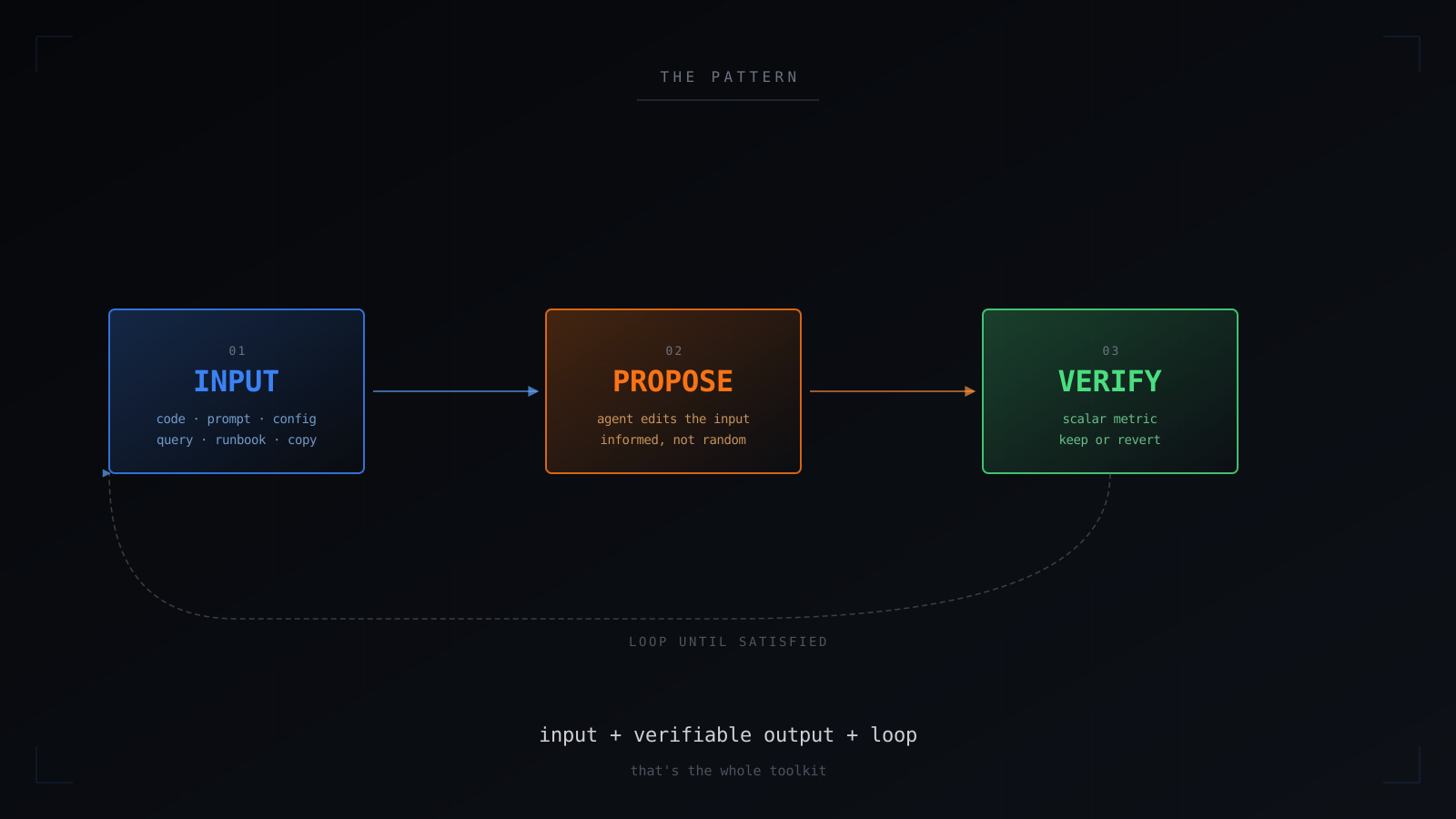
Karpathy shipped autoresearch and named a pattern everyone could already run. The real insight is that the loop works anywhere you can define a verifiable output. You can apply it today, in any field, without waiting for a framework.
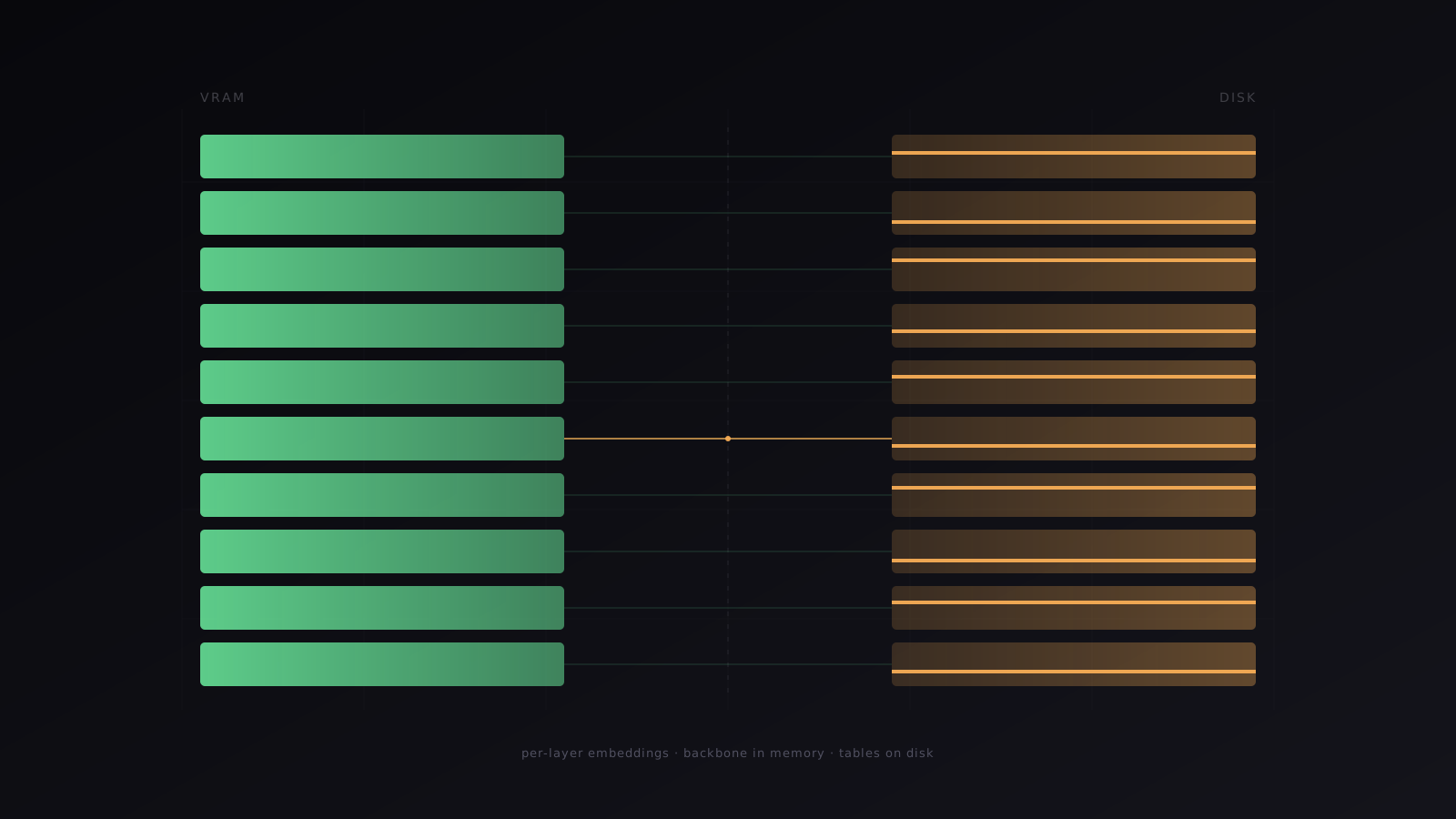
Gemma 4 dragged Per-Layer Embeddings back onto the timeline, so I rebuilt PLE from scratch, hit the dead ends honestly, and measured what actually worked.
Two people can look at the same dataset and walk away with opposite conclusions. The difference is not intelligence. It is how they think about uncertainty, assumptions, and the structure behind the numbers.

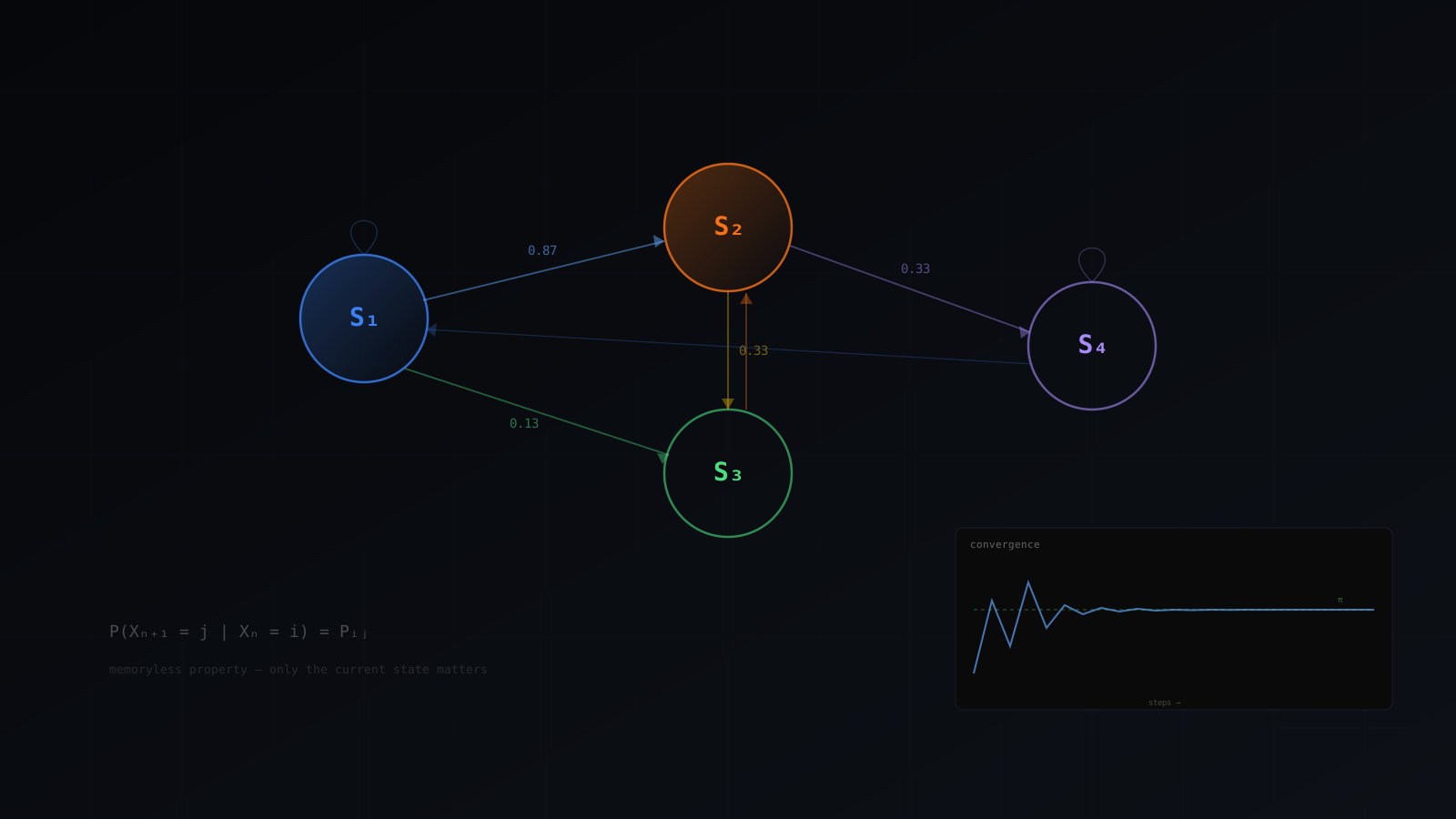
A Russian mathematician picked a fight over free will, accidentally invented the most important idea in probability, and 120 years later it powers Google, nuclear physics, and every large language model you've ever used. Here's how Markov chains actually work.
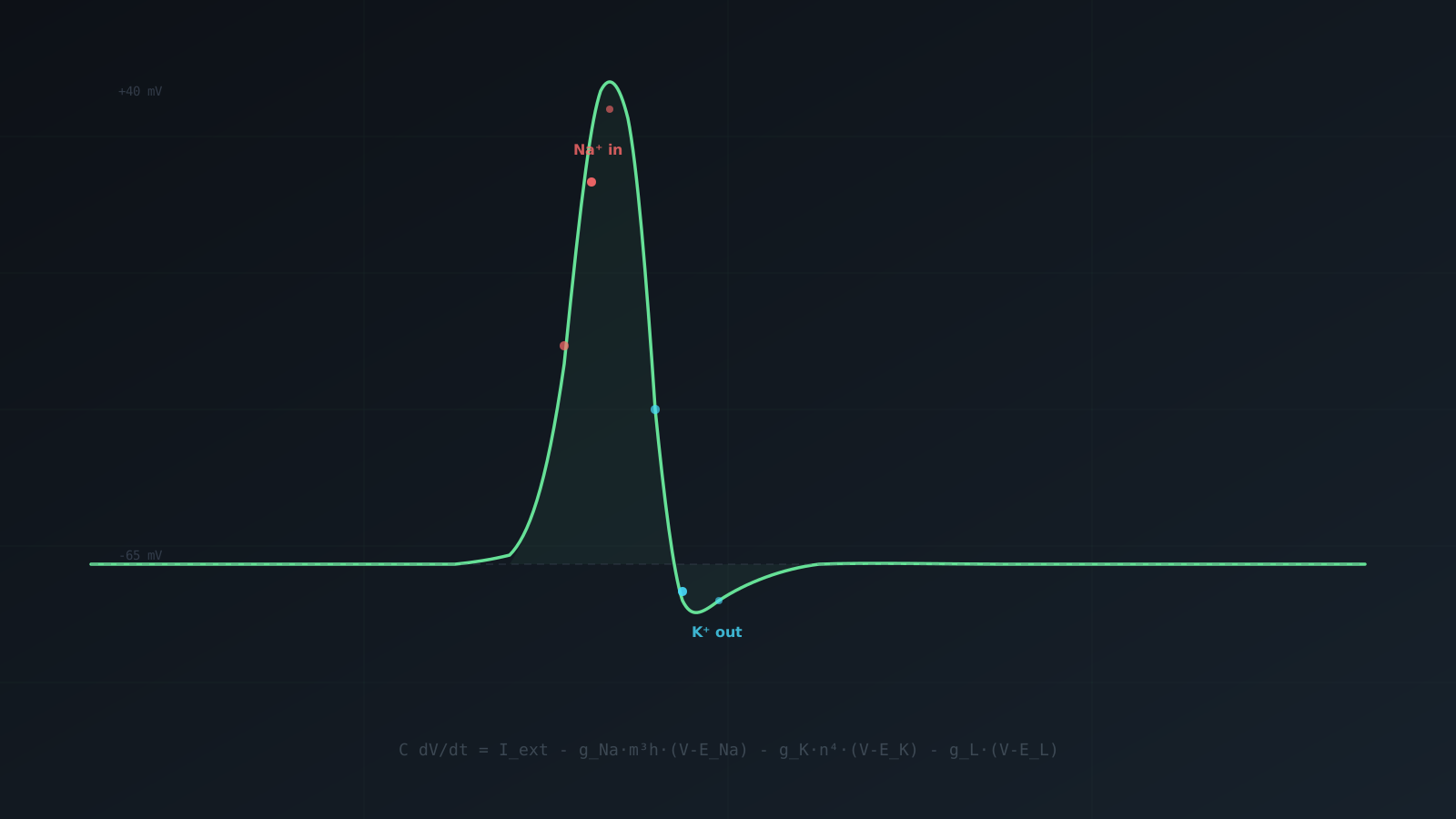
I went down a neuroscience rabbit hole and rebuilt the Hodgkin-Huxley model from scratch. Four differential equations that describe how neurons fire, predicted molecular structures decades before anyone could see them, and won a Nobel Prize. Here's how they work, with interactive simulations.
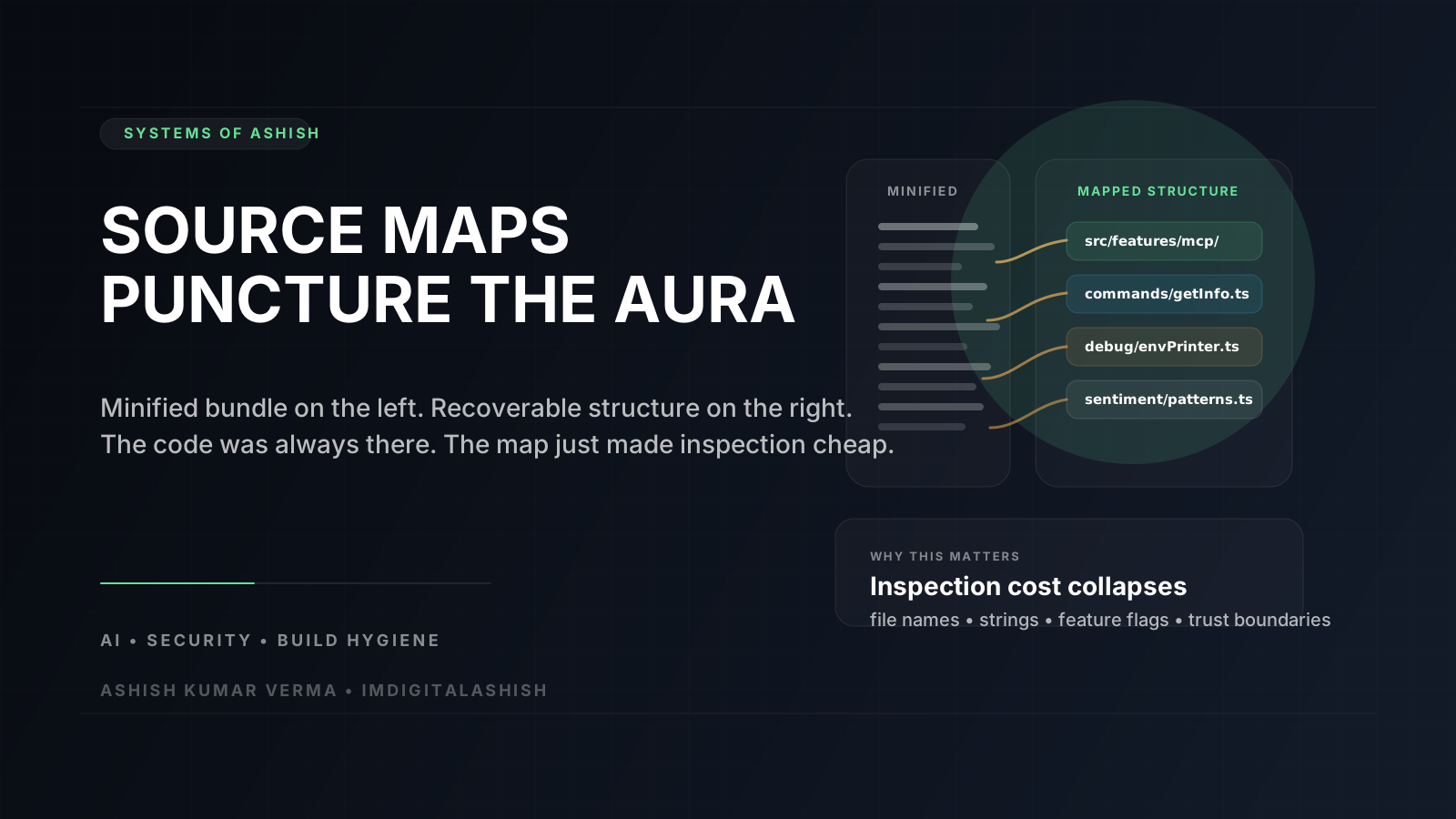
The Claude Code source map story turned into a public dunk fest, but the real lesson is about build hygiene, trust boundaries, and how exposed modern AI tools can get.
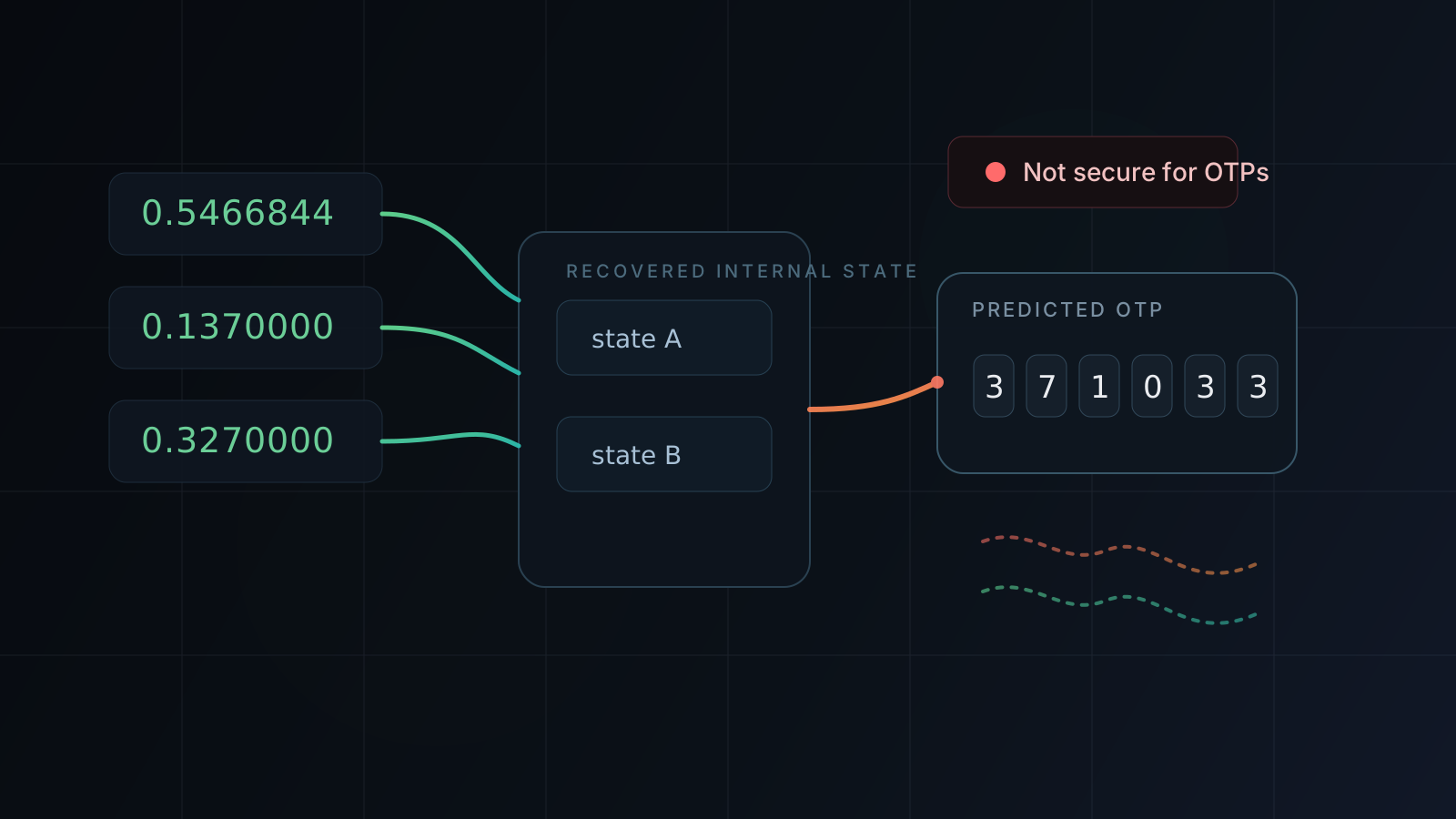
I took three Math.random() outputs from Firefox, recovered the internal PRNG state using Z3, and predicted the next values exactly. This is why OTPs must never use Math.random(). It is not random in any security sense.
I recreated the relativistic fuel math from Project Hail Mary, found a stopping problem in the calculations, reached out to Andy Weir directly, and got confirmation of where the numbers went wrong. The ship doesn't stop, and here's the physics that explains why.
A practical breakdown on what actually goes wrong with AI coding agents in production, from instruction overload and horizontal planning to why humans still need to do the real thinking. Written from experience shipping real systems at scale.
A rebuttal to AI replacement hype from someone who builds production AI systems at scale, explaining why human judgment, architectural thinking, and oversight matter more than ever, and why trusting AI to replace you is the actual danger.
A step-by-step JavaScript and Canvas API tutorial for building a signature drawing app that lets users draw on a canvas and export the result as a PNG.